BEST HORROR PERSPECTIVE SHIFT
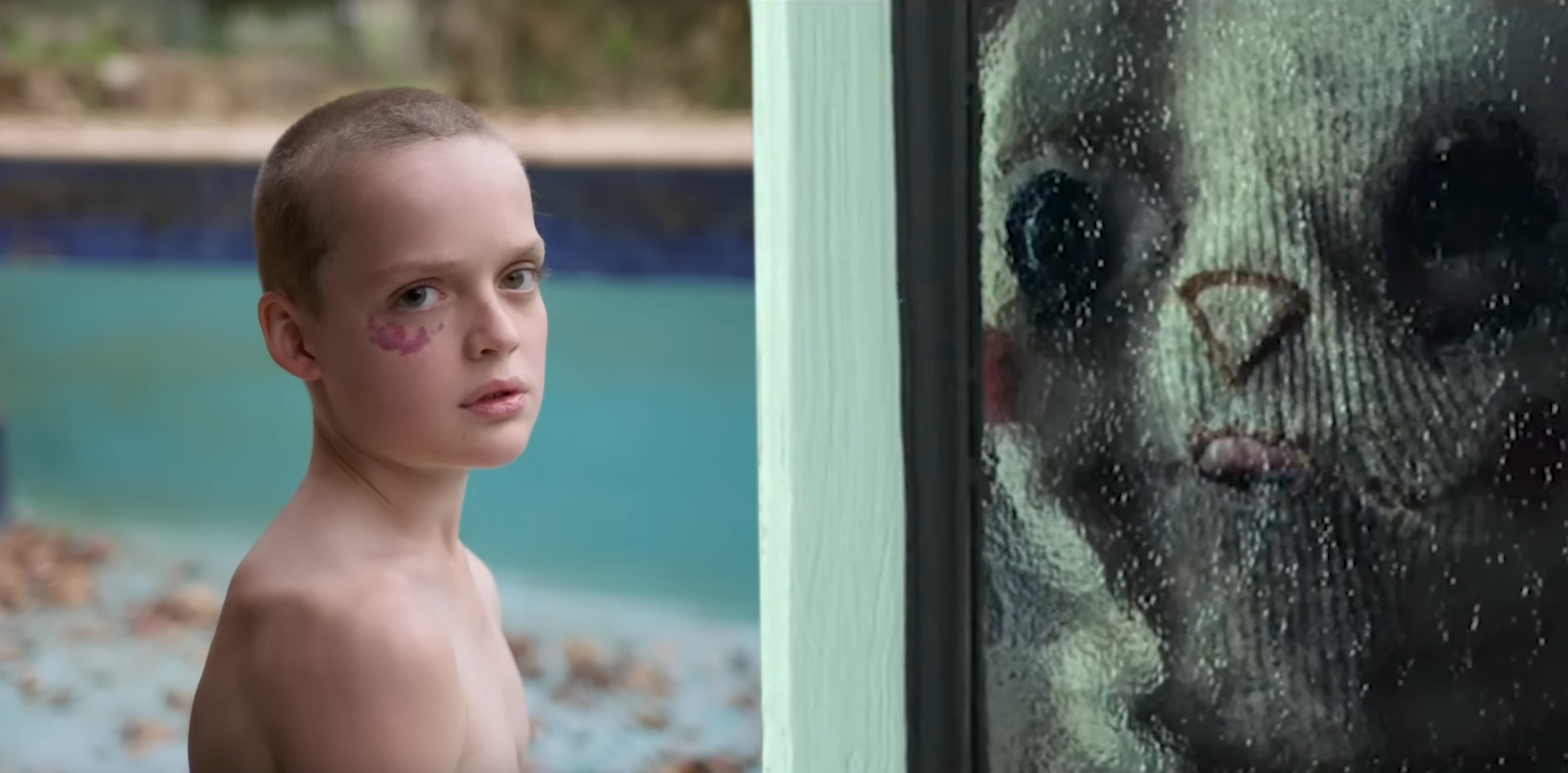
Bring Her Back / The Orphanage
The juxtaposition of supernatural and natural horror is nothing new in cinema, but has definitely increased in popularity over the last 15 years. A transformation, or line-blurring, between an ontological horror and the horror of us is one of the more critically compatible themes within genre film, giving many of the movies that explore these themes a deeper respect from audiences.
Films like Hereditary (2018), The Witch (2015), and The Babadook (2014) typically transcend the stigma of ‘horror’ due to their human component. They find themselves welcome in discourse usually associated with ‘real’ or ‘serious’ films, elevated above the quick-buck-genre-slop we horror enjoyers are expected to be grateful for every October.
SPOILERS AHEAD
In 2007, something happened in a horror movie that completely changed my perspective on what horror could do, what horror could be, and it has stayed with me for almost 20 years.
In Guillermo Del Toro’s The Orphanage (2007), we (the audience) have been taken on a typical, albeit well-done, haunted house romp. Laura (Belén Rueda) has returned to her massive, old-fashioned childhood home, once an orphanage, hoping to renovate it into a place for disabled children. After arrival, Laura’s adopted son, seven-year-old Simón, draws a picture of his new invisible friend: a boy with a clown-faced sack over his head. After an hour or so of tension and disquiet, with Laura predominantly alone in this increasingly haunted house, she realises Simón is missing.
Simón was injured and trapped during the renovations to the home. When Laura finds him, it is too late. Simón is dead. At this moment, Laura releases a grief-drenched scream that makes every ‘scary’ moment leading up to it seem almost farcical. This is real horror. This is human agony. Not a jump scare, not a ghost-boy with a sack head, but a mother confronted with the death of her child.
My entire perspective on the movie had been instantly shifted. As an audience, we had been suddenly confronted with the depths of anguish, and we were no longer watching between our fingers; we were shooing ghosts away, ambivalent to the supernatural, as we sat with breaths held and mouths open to the spectacle of the everyday.
In an expertly clean resolution to the tonal shift, it turns out the ghost kids are actually a friendly bunch in need of a mother, so Laura’s (and our) journey can continue with the same investment as before, only reframed and repurposed.
It is that moment, that feeling, that perspective shift we’re awarding: the diminishing fear of the unknown due to the developing fear of the known. Whether, like in The Orphanage, it’s in a single, world-shattering scene, or a slow crescendo of competing concerns, shifting weight from supernatural to human threat, as seen in Bring Her Back (2025).
CONTENDERS
Coming into this award, the top-of-my-head list for contenders was: The Innocents (1961), The Orphanage, The Babadook, The Witch, Goodnight Mommy (2022), Hereditary, and Bring Her Back.
The Innocents was my first introduction to this idea. I have a terrible memory; I watched The Lodge (2019) last night in research for this award, and this morning it took me about 90 seconds to remember any hint of what the film was about. As soon as my brain grabbed an early scene of Alicia Silverstone in a memorably narrow kitchen, I could recall the entire movie, but for a moment it was completely gone.
By contrast, I watched The Innocents as a kid; it was the night of Christmas Eve, and my dad and I would ritualistically watch old horror movies. I was maybe 10 years old, but I can still perfectly recall Deborah Kerr tightly cradling Miles in her arms during the film’s climax. That scene is on the back of my eyelids.
Laura finding Simón and Miss Gibbons (Kerr) cradling Miles are similar emotional catalysts. There’s a huge amount of discourse around the ambiguity of the ending of The Innocents, but my child brain believed one thing: she snapped his neck protecting him. And it’s here that I realise we need to break down the category further.
The Babadook: disqualified
The Babadook is being disqualified.
Now, I’m a Babadook defender. I think people don’t like it because it isn’t enjoyable in any direction; it’s not scary, it’s not particularly sad, it’s not funny, and the drama is peculiar. Going in not only expecting the horror film the marketing suggested, but wanting the horror experience the marketing promised, could easily skew your opinions. However, it’s a well-made film with fantastic performances. It’s not meant to be fun; it’s two unlikable protagonists in a slow-burning story concerning a very on-the-nose metaphor for grief.
I rewatched Babadook today, after loving it in an early screening, and I realised there’s not really any room for ambiguity. There was no moment when the monster wasn’t clearly the mother’s grief. It has no physical form until she gets really unwell, by which point we’ve seen, from her own illustrations, that the Babadook is her sickness. This is, cut and dry, a movie about grief. There is no reasonable audience doubt as to the inclusion of a paranormal element, despite what the trailers imply. To this end, I would argue that despite the framework of supernatural and human horror, there is no perspective shift in The Babadook.
HEREDITARY AND BRING HER BACK
Hereditary and Bring Her Back occupy a similar tangent to one another: both sides of the coin, supernatural and natural, are ferocious. Unlike Babadook, where the horror is a literal visualisation of grief and nothing more, Hereditary and Bring Her Back operate with dual force: the supernatural is horrifying, people are horrifying, and the whole goddamn runtime offers no reprieve.
Despite some fantastically memorable moments in Hereditary, Bring Her Back, for me, is triumphant in this category. Other than the bait-and-switch scene, where the young girl prostituted as marketing bait was killed off early (a moment rivalling Drew Barrymore’s Scream death after all the trailers), Hereditary involves some arduous unpicking to really begin to delineate between supernatural and natural horror.
If Babadook is only human, Herediatry is only both. There is no moment of shift in Hereditary. It’s always everything, supernatural and human, all of the time.
Bring Her Back, meanwhile, does something elegant.
A gritty human opening is quickly met with supernatural undertones once the main cast is situated in the core destination, Laura's (Sally Hawkins) house. After an early emphasis on the unknown, both themes slowly ramp up, with the supernatural threat gradually plateauing in contrast to Hawkins’ phenomenal performance of insidious desperation. This manipulation of the audience’s emotions is a masterclass.
Much like The Orphanage, Bring Her Back presents us with the direct trade. The diminishing of one fear (demon child) when confronted with another (Hawkins).
And the winner is
In the interests of Itty Bitty Award integrity, Bring Her Back has to triumph over The Orphanage.
I can not impartially judge The Orphanage. I found that moment exquisite; I have mentioned it in tens of horror conversations over the years. It’s the reason for this specific award and a feeling I continue to seek in horror. It was a brand new experience for me as an audience member, something that rarely happens today. However, we don’t get to witness the ‘scary’ ghosts after Simón’s death; like Simón, they’re just kids in need of nurture. As an audience, we never get to sit with the shift; it reveals itself only in retrospect.
However, Bring Her Back undeniably presents both perspectives and manipulates the audience’s relationship to both in tandem. To watch Bring Her Back is to universally experience a perspective shift.
Congratulations to Bring Her Back for winning Best Horror Perspective Shift.